OXO — Tic-Tac-Toe Betting Game in the 1xGames Section
What OXO Is and Why It Hooks Players 🎲
Everyone in Algeria has drawn a noughts-and-crosses grid on the corner of a notebook page at least once. OXO takes that same three-by-three board and turns it into a fast betting round in the 1xGames section of the official 1xBet site. The design is deliberately plain: a clean grid, bold crosses, rounded noughts, a stake panel underneath and a single Play button. No long intro animation, no story to sit through.
What keeps players coming back is the pace. A round lasts seconds, the outcome is visible on the board itself, and you never have to interpret a complicated paytable while symbols spin past. You pick the amount, you press Play, symbols fill the squares one move at a time, and the line either forms or it does not. That transparency is rare among quick-round titles in the 1xGames catalogue, and it is the main reason OXO works well as a short break between longer sessions.
How the Game Is Built: Rules and the Flow of a Round
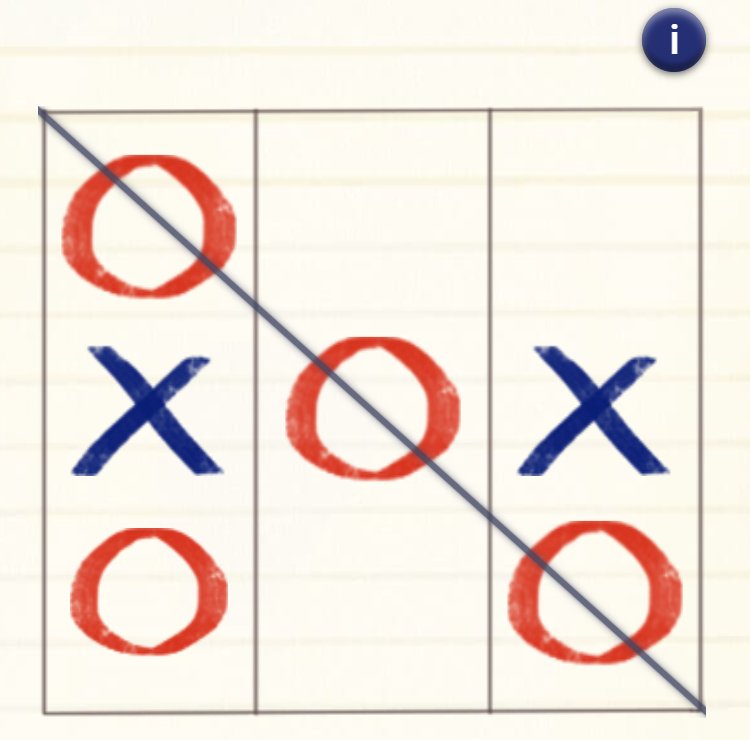
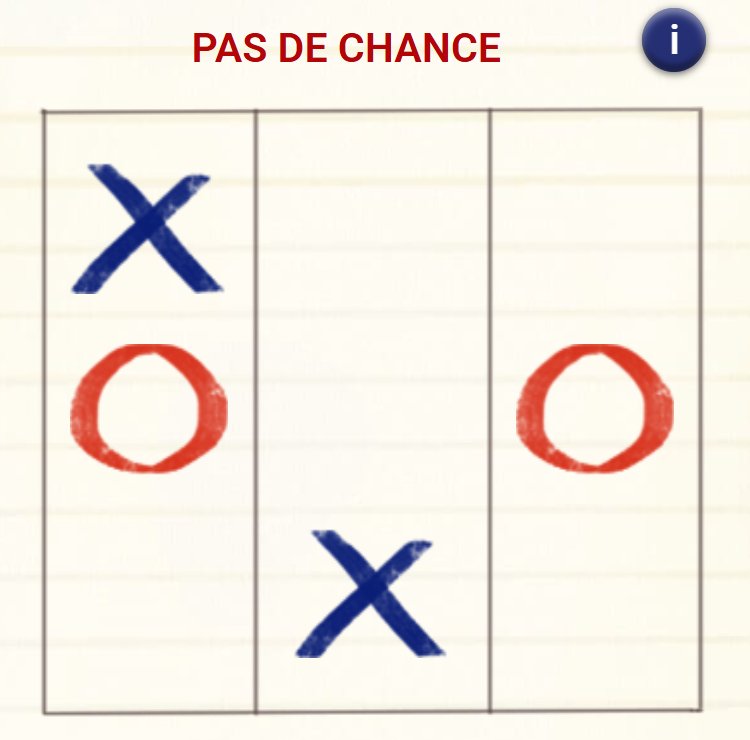
The board holds nine cells. Crosses and noughts are placed on it one move at a time, following the internal logic of the round, until a line is completed or the grid runs out of free squares. Your goal is a straight sequence of three matching symbols — horizontal, vertical or diagonal — before the board fills up or the opposing side blocks the sequence.
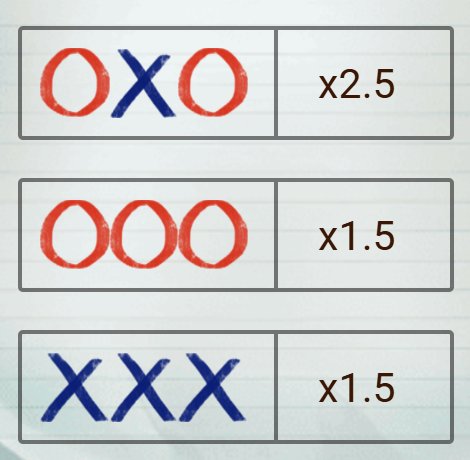
Five fixed paylines run across that grid, and the round is settled by the final arrangement of symbols on them. Three matching symbols on a payline — OOO or XXX — pay 1.5 times the stake. The special arrangement of two noughts with a cross between them, OXO, pays 2.5 times the stake. Wins on separate paylines are added together, so a single grid can settle more than one line at once.
If no winning line appears, or the round ends in a draw or a blocked position, the stake is lost and the board resets. Outcomes come from a certified random number generator, which means each grid is generated independently and nothing carries over from the previous round. There is also an autoplay switch: set your amount once and the game repeats identical rounds for you without extra taps.
Stakes and Payouts in OXO 💰
Before you commit real money, it helps to see the moving parts side by side. The table below sums up what you actually control in OXO and what each element changes for you.
Parameter | Value | What it gives the player |
|---|---|---|
Grid | 3×3, nine cells | The whole round is visible at once, no hidden reels |
Paylines | 5 fixed lines | Several lines can settle on the same board |
OOO or XXX combination | ×1.5 of the stake | The frequent result that keeps a session going |
OXO combination | ×2.5 of the stake | The top pattern of the game, the biggest single hit |
Payline totals | Summed together | One grid can pay more than one combination |
Stake | Preset buttons or a custom amount in DZD | Full control over exposure before every round |
Demo mode | Available with virtual credits | Learn the rhythm of the board at zero cost |
Autoplay | Series of rounds at a fixed stake | Hands-free play when the stake is already settled |
What Those Multipliers Mean in Practice
The two multipliers are the heart of the game, and they behave differently. The 1.5 line is the common one — three identical symbols is the pattern the grid produces most often, and it is what keeps a session ticking over. The OXO combination at 2.5 is the pattern worth waiting for, because a single grid that lands it moves the balance far more than a run of ordinary lines.
Because payline wins are summed, a well-filled board can settle several combinations at once, and that is where the strongest rounds come from. This is also why the stake size matters more than it first appears: every multiplier is applied to the amount you set before pressing Play, so doubling the stake doubles every possible outcome, good and bad. Set the number with that in mind rather than adjusting it mid-session on instinct. A free round in demo mode is the cheapest way to watch how often each pattern shows up before you decide on a working amount.
How to Start Playing OXO 🚀
Getting to the board takes a couple of minutes.
Open an account. New players start by filling in the short account registration form — a phone number or an email address is enough, and the currency should be set to Algerian dinars so deposits and withdrawals stay in DZD.
Sign in. Returning players go straight to the login page and enter their usual credentials.
Fund the balance. Choose a deposit method from the cashier and confirm the amount; BaridiMob and card payments through the local SATIM network credit almost immediately.
Find the game. Go to the 1xGames section and search for OXO by name, or browse the quick-round shelf where it sits next to other in-house titles.
Try it in demo first. The game runs in a free mode with virtual credits, which is the right place to learn the rhythm of the board without spending anything.
Set your stake. Use the preset buttons or type a custom amount into the field.
Press Play. Watch the grid fill, check the lines, and repeat — or switch on autoplay for a series of identical rounds.
Before the first real stake, it is also worth checking the current bonus offers, since extra balance from a welcome package can extend a session considerably.
Tactics and Bankroll Management
OXO is a game of fixed multipliers and independent rounds, so no pattern of previous grids tells you anything about the next one. What you can manage is your own money, and that is where a bit of discipline pays off.
Decide on a session budget before you open the game and split it into a fixed number of rounds. If you plan to play forty rounds, your stake is one fortieth of the budget — simple arithmetic that stops the balance from disappearing in five aggressive presses. Keep the stake flat rather than chasing losses with bigger amounts; the multipliers do not change when you raise the bet, only your exposure does.
Autoplay deserves a warning of its own. It is convenient, but it spends the balance faster than manual play because there is no natural pause between rounds. Use it in short bursts of ten or fifteen rounds and check the balance afterwards. Setting a stop point in both directions helps too: a figure at which you close the game after a good run, and a lower one at which you stop for the day. Players who also enjoy longer sessions often alternate OXO with titles from the live casino floor, which slows the tempo down between quick-round bursts.
Playing from a Phone and Depositing in Algeria 📱
The grid was clearly built with small screens in mind. Nine large cells, oversized stake buttons and a single action control mean the game plays comfortably in one hand on a mid-range Android phone, which is what most Algerian players use. It runs in the mobile browser and inside the app, and the mobile app for Android and iOS keeps the 1xGames shelf one tap away without reloading the site each time.
Funding the account from Algeria is straightforward, and the methods below are the ones that actually work locally.
Method | Type | When it is convenient |
|---|---|---|
BaridiMob | Mobile bank transfer | Everyday top-ups in DZD straight from the phone |
CIB / Edahabia (SATIM) | Local bank card | When you prefer a familiar bank interface |
Cash top-up points | Cash payment | For players without a bank account or card |
USDT (Tron / BSC) | Cryptocurrency | Larger amounts, independent of banking hours |
Binance Pay | Crypto wallet | Instant transfers if the funds already sit on the exchange |
RedotPay | Wallet and card | A backup route when a bank payment is declined |
BaridiMob remains the default choice for most players because the transfer is confirmed from the same phone that runs the game, and the money lands in DZD without a conversion step. Cards issued on the SATIM network cover players who prefer a bank interface, while cash points suit anyone topping up without a bank account at all. Crypto transfers appeal to a different profile — larger amounts, no bank involved, and processing that does not depend on local banking hours. Withdrawals generally return to the method used for the deposit, so pick the one you actually want your winnings to arrive on.
OXO in Short
OXO is a small game with an honest structure: a familiar grid, five paylines, two multipliers and a round that ends before you get distracted. It does not pretend to be more than that, and the plainness is the point — you can see exactly why a round paid or did not. For Algerian players it fits the way phone gaming actually happens here: a few minutes on the bus, a couple of rounds during a break, a balance funded in dinars through a method already on the phone. Learn the board in the free mode, settle on a stake you can repeat forty times without flinching, and treat the 2.5 combination as a bonus rather than a plan.
Popular events and sports news
OXO — Frequently Asked Questions
How do you play OXO?
Set a stake with the preset buttons or a custom amount, press Play and watch the 3×3 grid fill with crosses and noughts. If three matching symbols land on one of the five paylines, or the OXO pattern forms, the round pays; otherwise the stake is lost. Autoplay repeats the same stake for a series of rounds.
Can I try OXO for free before betting real money?
Yes. The game has a demo mode with virtual credits, so you can play full rounds, see how often each combination appears and get used to the pace of the board before switching to a real balance in dinars.
What is the minimum stake and can I change it between rounds?
The stake is chosen before every round from the preset buttons or typed manually into the field, and the available range is shown in the game panel in DZD. You are free to change it from one round to the next, including while autoplay is switched off.
How do I deposit and withdraw in Algerian dinars?
Open the cashier and pick BaridiMob, a CIB or Edahabia card through SATIM, a cash top-up point, or a crypto option such as USDT and Binance Pay. Withdrawals normally go back to the method used for the deposit, so choose the one that suits you before the first payment.
Is the result of a round really random?
Each round is generated by a certified random number generator, and the boards are independent of each other — a previous win or loss has no influence on the next grid. The full outcome is visible on the nine cells, so you can always see which payline settled.